
Asphalt or Concrete: What Holds Up Better in Southern Maryland
Both work. In this climate and on these soils, asphalt wins on repairability, on freeze-thaw, and on ground that moves. Here is the honest case for each, including when I would tell you to pour concrete instead.
The short answer
For most homes in Anne Arundel and Calvert counties, asphalt is the better driveway. It flexes with ground that moves, it handles freeze-thaw better, it can be repaired in sections instead of replaced in slabs, and it goes down and gets used in days instead of weeks. Concrete lasts longer on paper and looks sharper to some people, and there are jobs where I would tell you to pour it. But I am a paver who will say this plainly: on coastal plain soil with a high water table and a real freeze-thaw cycle, asphalt is the more forgiving material.
How each one handles freeze-thaw
Maryland gets the worst version of winter for pavement. Not deep steady cold, but repeated cycles above and below freezing, sometimes several times in a week. Water gets into the surface, freezes, expands, and works the material apart. Asphalt is flexible. It moves a little and comes back. Concrete is rigid, so when the ground under it heaves or settles unevenly, it does not flex, it cracks. And a crack in a concrete slab is a permanent feature of that slab. A crack in asphalt is something we fill in an afternoon.
Repairability is the real difference
This is the argument that should decide it for most people. When asphalt fails in one area, we cut out that area, rebuild what is under it, and patch it, and the repair blends in reasonably well. When a concrete slab cracks or spalls, your options are to live with it, to patch it in a way that stays visible forever, or to break out and replace the whole slab. Concrete repairs almost always look like repairs. Over twenty years of owning a driveway, that difference matters more than the spec sheet lifespan.
What the ground under your driveway decides
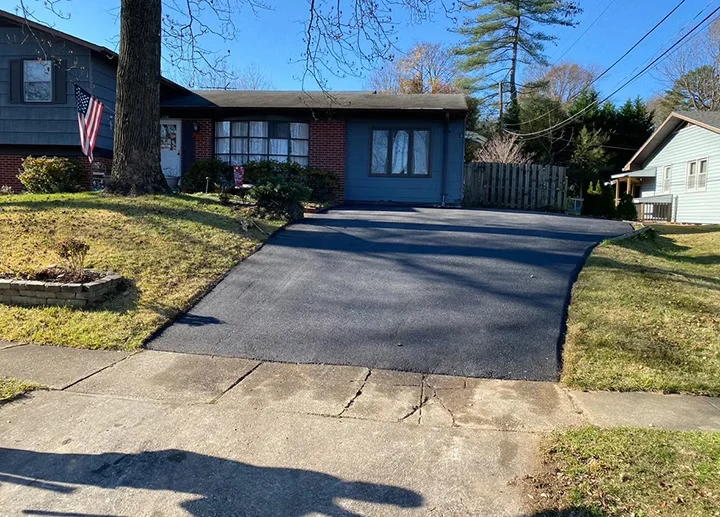
Anne Arundel and Calvert sit on the Atlantic Coastal Plain. That means sandy soils in a lot of places, clay in others, and near the Bay a water table that can sit high enough to matter. Ground like that moves. It settles, it holds water, and it shifts seasonally. A rigid slab on soil that moves is a slab that will crack somewhere. Asphalt tolerates that movement. If your lot is close to the water, on fill, or has ever had a settling problem, that pushes the decision toward asphalt hard.
Salt and winter treatment
Rock salt and most de-icers are harder on concrete than on asphalt. Salt drives freeze-thaw damage at the concrete surface and causes spalling, which is the flaking and pitting you see on older concrete aprons and sidewalks. Asphalt is not bothered by salt the same way. What does hurt asphalt is petroleum, so if your winter routine includes a lot of de-icer, that is a point for asphalt, and if it includes an oil leak, that is a separate problem worth reading about.
Looks, and being honest about it
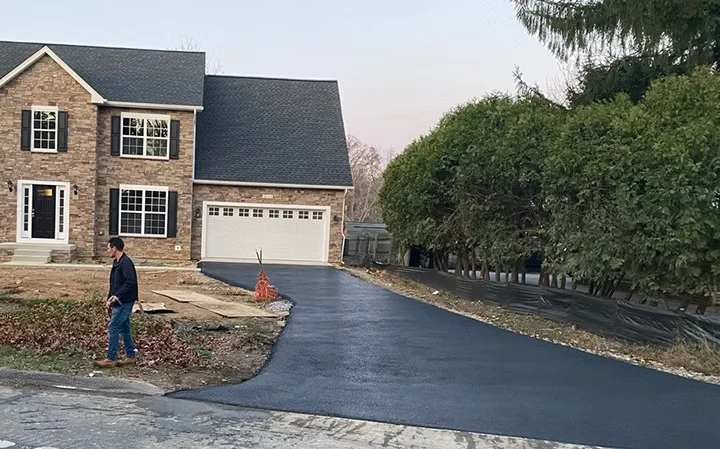
Concrete gives you options asphalt does not. Stamped patterns, exposed aggregate, colors, and a bright finish that some houses genuinely wear better, especially in neighborhoods where every driveway is concrete. Asphalt gives you one look: black, clean, and flat. Most people around here like it, and a fresh black driveway against a green lawn does a lot for a house. But if the look is your priority and the budget is there, concrete has range that asphalt does not.
Lifespan and the maintenance rhythm
Concrete generally lasts longer than asphalt before it needs full replacement. Asphalt, built on a proper base and maintained, is commonly expected to run about 15 to 25 years in this climate. Asphalt also has a maintenance rhythm: sealcoat every few years, fill cracks as they show up. Some people see that as a downside. I see it as the thing that lets you stretch a driveway out, because each of those small steps is cheap compared to replacement. Concrete needs less routine attention, and then when it goes, it goes expensively.
When I would tell you to pour concrete
There are real cases. A very short, flat apron that will never carry heavy loads. A driveway that is going to sit under constant heavy static weight, like where a large RV parks in the same spot all summer, since asphalt softens in heat and takes an impression. A property where every neighbor has decorative stamped concrete and matching matters for resale. Or a homeowner who simply does not want a maintenance schedule and is willing to pay more up front for that. I would rather tell you concrete is the right answer than sell you asphalt that is wrong for the job.
Keep reading
- New Driveway Installation
Building a driveway where there was not one before.
- Driveway Replacement
Replacing a worn or failing asphalt driveway.
- How Long an Asphalt Driveway Lasts
What sets the lifespan, and what cuts it short.
- Free Written Estimate
We will tell you if concrete is the better call for your lot.
Frequently Asked Questions
For most Southern Maryland homes, asphalt is better. It flexes with coastal plain soils that shift, handles repeated freeze-thaw cycles without cracking permanently, resists de-icing salt better than concrete, and can be repaired in sections. Concrete lasts longer before full replacement and offers more decorative options, but its cracks and spalling are permanent.
Asphalt built on a proper compacted base is commonly expected to last about 15 to 25 years in Maryland's climate with routine sealcoating and crack filling. Concrete typically lasts longer before needing full replacement, but it is harder and more expensive to repair, and salt exposure causes surface spalling over time.
Salt is much harder on concrete than on asphalt. It accelerates freeze-thaw surface damage and spalling on concrete. Asphalt is largely unaffected by salt itself. What does damage asphalt is petroleum, including gasoline, motor oil, and solvents, which dissolve the binder holding the surface together.
Concrete is rigid and asphalt is flexible. Anne Arundel and Calvert counties sit on Atlantic Coastal Plain soils that settle and shift, and near the Chesapeake Bay the water table can sit high. When that ground moves, a rigid slab cracks, while asphalt flexes and recovers.
Yes. A failed area can be cut out, the base beneath it rebuilt, and the section patched, and the repair blends in reasonably well. Cracks can be filled. This is the main long-term ownership advantage over concrete, where a cracked slab generally has to be lived with or broken out and replaced.