
How Thick Should an Asphalt Driveway Be?
General residential guidance is 2 to 3 inches of compacted asphalt over 4 to 6 inches of compacted base stone. The word doing the work in that sentence is compacted, and that is where estimates quietly differ.
The general guidance
For a typical residential driveway carrying cars and light trucks, general industry guidance is roughly 2 to 3 inches of compacted asphalt over roughly 4 to 6 inches of compacted graded aggregate base. Heavier use, soft soil, or a long lane that trucks use pushes both of those numbers up. I want to be clear that this is general guidance and not a promise about your driveway, because the right build depends on what your soil is doing, what drives on it, and how water moves across it. Anybody who gives you a thickness spec without seeing the site is guessing.
Compacted is the word that matters
Here is the thing most homeowners have never been told. Asphalt is laid loose and then rolled, and it loses a meaningful amount of height in the process. So three inches of loose material is not three inches of finished driveway. If one estimate says three inches and another says three inches, and one of them means compacted while the other means what came off the truck, those are different driveways at different prices, and the difference is invisible the day it is finished. Ask the question directly: is that compacted thickness or laid thickness? A contractor who does this for a living will answer it in one sentence.
The base matters more than the surface
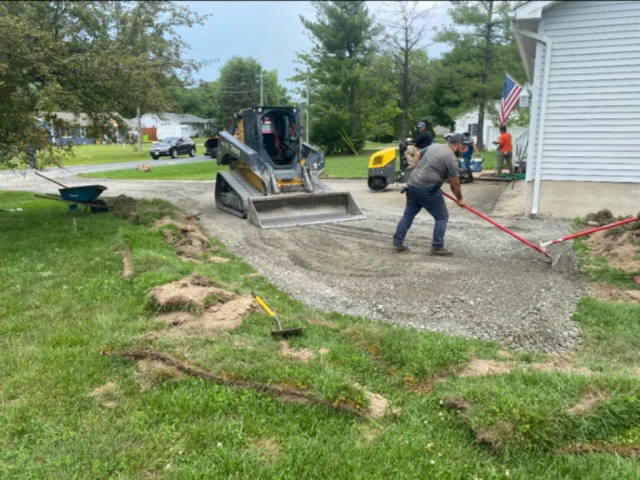
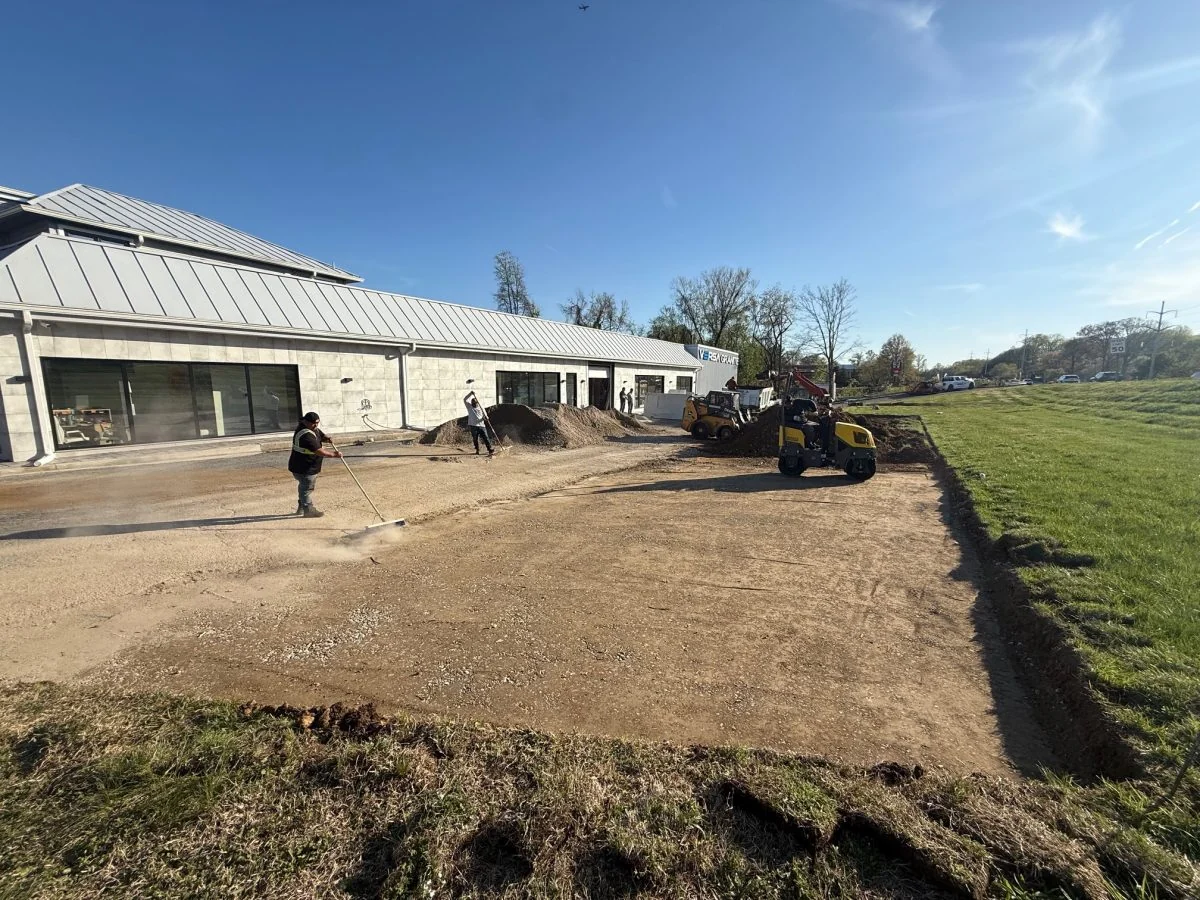
If I could only get one thing right on a driveway, it would be the base. The asphalt is a wearing surface that spreads load. The base is what carries it. Around here the standard is CR-6 crusher run, a graded aggregate that locks together tight when it is compacted properly. Properly means in layers, or lifts, with a roller or plate compactor on each one, not dumped to depth and rolled once on top. It also means the base is clean and not mixed with the soil under it, because stone contaminated with dirt does not lock up and does not drain. Preparation is key. I say that to every customer and I mean it as a structural statement, not a slogan.
Boat trailers, RVs, and work trucks
This matters more in our area than in most. In Deale, Shady Side, Churchton, and all along the Bay, a lot of driveways have a boat on a trailer going down them every weekend from spring through fall. A loaded trailer concentrates weight on a small number of wheels, and it turns and pivots in the same spots. RVs do the same and then sit parked in one place in the summer heat, and asphalt softens in heat, so a static load can take an impression. Contractor trucks, a dump trailer, or a landscape trailer all count too. If any of that describes your driveway, say so at the estimate. It is a build decision, not an afterthought, and it usually means more base and more surface in the area that takes the load.
Soft spots and undercutting
Sometimes when the old surface comes off, a spot is soft. It pumps water, or the stone has been driven down into mud, or a section flexes underfoot. Building over that is a waste of everybody's money, because that spot will fail first and it will take the surface around it with it. The fix is to dig the bad material out and rebuild the area with proper stone, which is called undercutting. It adds to the job. I would rather show a homeowner a soft spot while the driveway is open and explain the choice than pave over it and get a call in two years. That is part of what showing every step of the job means.
One lift or two
On thicker builds, asphalt goes down in two courses: a coarser base course and then a finer surface course on top. The reason is compaction. Very thick single lifts do not compact evenly all the way through, so you get a surface that looks right over material that never reached proper density. Two lifts also give you a chance to catch and correct grade before the finish layer. For most standard residential driveways a single properly compacted surface course over a solid stone base is appropriate. For heavier builds, a long lane, or a commercial lot, two courses is usually the right answer.
Edges are the thinnest, weakest part
The middle of a driveway is supported on all sides. The edge is not. That is why crumbling starts at the edge, especially where a wheel drops off the pavement onto grass and works the same spot over and over. Good edge work means the base extends past the asphalt rather than stopping at it, and it means the edge gets hand worked and compacted rather than just rolled and left. If your driveway has a pattern of edges falling apart while the middle is fine, that is an edge and base construction issue, not a material issue.
What to ask your estimator
Five questions. What is the compacted thickness of the asphalt? What is the depth and type of the base stone? Is the base being compacted in lifts? What happens if you find a soft spot, and who decides? Where is the water going? A contractor who does good work will answer all five plainly, and getting the answers in writing is how you compare two quotes honestly. Also confirm the MHIC license, which Maryland requires. Ours is MHIC #05-169105.
Keep reading
- Grading and Base Work
The stage that decides how long the driveway lasts.
- Driveway Replacement
Where base depth and thickness get decided for real.
- What Drives Driveway Cost
Thickness is usually where two different quotes differ.
- About South State Paving
Fourth-generation paver, owners on site, MHIC licensed.
Frequently Asked Questions
General industry guidance for a typical residential driveway carrying cars and light trucks is roughly 2 to 3 inches of compacted asphalt over roughly 4 to 6 inches of compacted graded aggregate base. Heavier loads, soft soils, and long lanes used by trucks generally call for more of both. The correct build depends on the site.
Asphalt is placed loose and then rolled, losing a meaningful amount of height during compaction. Laid thickness is what comes off the truck, and compacted thickness is what remains in the finished driveway. Two estimates quoting the same number can mean different amounts of material, so ask which measure is being quoted.
CR-6 crusher run is the graded aggregate base commonly used under Maryland driveways. It locks together tightly when compacted in layers. The base should be compacted in lifts rather than dumped to full depth and rolled once, and it must be kept clean of soil so it drains and stays stable.
Generally yes. Loaded trailers concentrate weight on few wheels and pivot in the same spots, and a parked RV applies a static load that can leave an impression in asphalt softened by summer heat. Tell your contractor at the estimate, because it is a build decision affecting base depth and surface thickness in the loaded area.
Edges lack the lateral support the middle of the driveway has, and wheels dropping off the pavement onto grass work the same spot repeatedly. Proper construction extends the stone base past the asphalt edge and hand works and compacts that edge rather than only rolling it.