
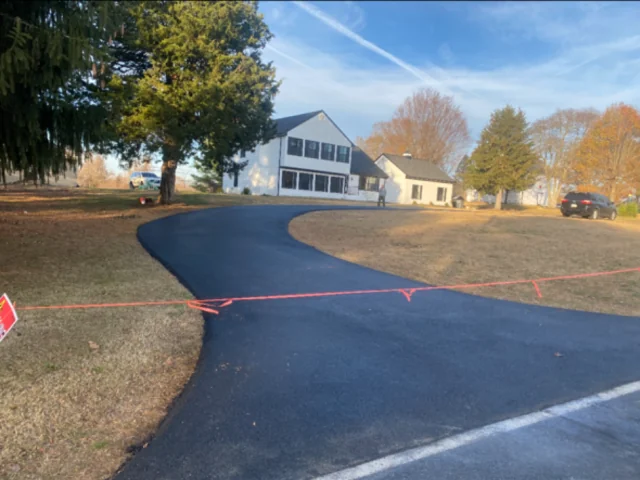
How Long an Asphalt Driveway Really Lasts in Maryland
About 15 to 25 years if it was built right. The spread is almost entirely about what is under the surface and whether water is getting out. Here is what decides which end of that range you land on.
The honest range
An asphalt driveway built on a properly compacted stone base, with water pitched away from it and routine maintenance, is commonly expected to last about 15 to 25 years in Maryland. I have seen driveways fail in six years and I have seen thirty-year-old asphalt that only needed a surface refresh. The difference was almost never the asphalt. It was the base, the drainage, and whether anybody did the cheap maintenance along the way.
The base decides it, not the asphalt
Asphalt is a wearing surface. It is meant to flex over something solid and spread the load. If the graded aggregate base under it is deep enough, clean, and compacted properly, the surface has support everywhere and it lasts. If the base is thin, contaminated with soil, or was never compacted, then every wheel that rolls across a weak spot works the surface until it cracks. That is where alligator cracking comes from, that web of interconnected cracks that looks like scales. Alligator cracking is not a surface problem. It is the surface telling you the base underneath has failed, and no amount of sealer fixes it.
Water is what actually ends driveways here
Water is the enemy in this climate, and we get it from two directions. From above, rain and snowmelt find a crack, sit in the base, and then freeze. Freezing water expands and lifts, and Maryland can run through that cycle many times in one winter. From below, a high water table near the Bay keeps the base wet, which weakens it and lets it pump mud up into the stone. A driveway that drains well can survive a lot. A driveway with a low spot that holds a puddle after every rain is on a clock, regardless of how good the asphalt was.
Five things that cut a driveway's life short
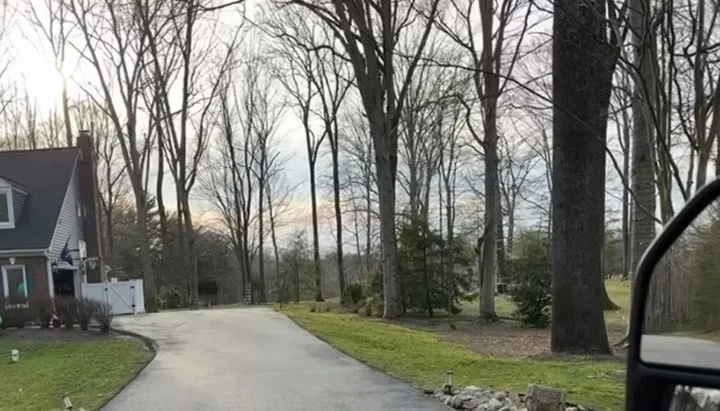
First, a base that is too thin for what drives on it. Second, standing water, whether from bad pitch or a failed drain. Third, tree roots, which is a real problem on the wooded lots and long lanes all over South County and Calvert, because roots lift and crack a surface from underneath and they do not stop. Fourth, heavy vehicles the driveway was never built for, meaning loaded boat trailers, RVs, delivery trucks, and dumpsters dropped on a residential apron. Fifth, letting cracks go. A crack is a doorway for water. Filling one costs very little and skipping it is how a small problem becomes a base problem.
The maintenance rhythm that actually adds years
New asphalt should cure before it gets sealed, generally something like six to twelve months, and sealing it too early traps the oils and causes problems. After that, sealcoating every few years protects the surface from oxidation, water, and UV. It is not paint and it does not add structure, but it slows the drying out that makes old asphalt gray and brittle. Crack filling is the higher-value job and the one people skip. Walk the driveway each spring, look for anything wider than a hairline, and get it filled before the next winter. Over-sealing is a real thing too, so every year is not better than every three.
Local conditions that shorten the clock
Shade is underrated. A driveway under heavy tree cover stays damp longer after rain, which means more time for water to work and more freeze-thaw exposure, and it collects leaf litter and organic debris that hold moisture against the surface. That describes a lot of properties off Route 256 and Route 258 and through the wooded parts of Calvert. Waterfront and near-water lots add the high water table. Long rural lanes add distance, which usually means the base got thinner somewhere in the middle because nobody was watching. None of these mean you cannot have a driveway that lasts. They mean the base and the drainage have to be right, because you do not have margin to waste.
How to tell you are near the end
Look for alligator cracking across large areas, not just one patch. Look for depressions and birdbaths that hold water. Look for potholes forming, edges crumbling away into the grass, and places where the surface feels soft or spongy underfoot on a hot day. Any of those over a wide area means the base is done and another overlay would just be hiding it. One or two isolated spots is usually a repair, not a replacement. If you are not sure which you have, get somebody to walk it with you and show you what they are seeing.
Resurface or replace
If the base is sound and the surface is just worn, oxidized, or lightly cracked, a resurface gets you a lot of years for less money. If the base has failed, if water is not leaving the driveway, or if the cracking is widespread and interconnected, replacement is the only fix that lasts. Overlaying a failed base is the most common way homeowners here waste money, because it looks perfect for a season or two and then the same cracks come right back through the new surface in the same pattern. Preparation is key, and the thickness of the material is key. That is true on a new driveway and it is just as true on the decision of whether to save this one.
Keep reading
Frequently Asked Questions
About 15 to 25 years when built on a properly compacted stone base, pitched so water drains away, and maintained with periodic sealcoating and crack filling. Driveways with a thin or poorly compacted base, or with standing water, can fail in well under ten years.
Interconnected cracking in a pattern resembling scales means the base under the asphalt has failed, not just the surface. Sealer and overlays will not fix it, because the support underneath is gone. Widespread alligator cracking generally means the driveway needs replacement rather than resurfacing.
Wait roughly six to twelve months after new asphalt is installed so it can cure, then sealcoat every few years. Sealing too early traps oils in the new surface, and sealing every single year is unnecessary and can cause buildup problems. Crack filling matters more than sealing and should be done as soon as cracks appear.
Yes, and it is a common problem on the wooded lots and long lanes across South County and Calvert County. Roots grow under the pavement and lift it, cracking the surface from below, and they keep growing. Heavy tree cover also keeps a driveway damp longer after rain, which increases freeze-thaw exposure.
Resurface when the base is sound and the damage is limited to surface wear, oxidation, or light cracking. Replace when the base has failed, when the driveway holds water, or when alligator cracking covers large areas. Overlaying a failed base looks good briefly and then the same cracking returns through the new surface.