
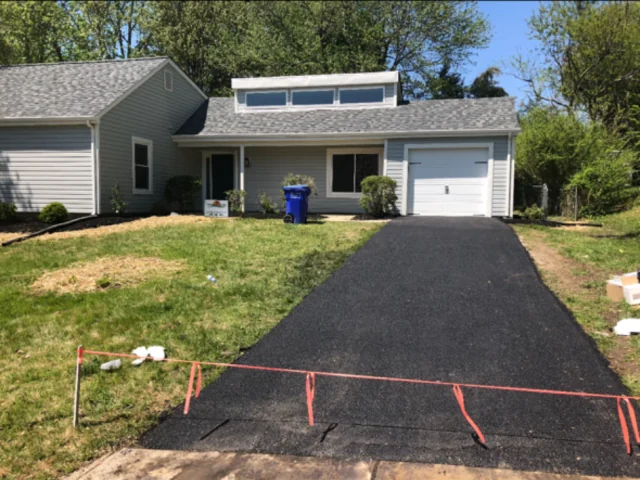
What Actually Drives the Cost of a Driveway Replacement in Maryland
Square footage is where a driveway estimate starts, not where it lands. Here is what moves the number up or down on a Southern Maryland job, and how to compare two quotes that look nothing alike.
Why no honest paver prices your driveway over the phone
Two driveways with the same square footage can be very different jobs. One sits on six inches of solid stone that somebody put down right in 1994. The other sits on soft fill over a high water table two blocks off the Bay, and it has been holding water at the garage for ten years. Same size, same address on paper, and the second one needs work under the surface that the first one does not. Anyone who quotes a firm number before walking the site is either padding the price to cover what they have not seen, or they are going to find a reason to change it later. Ask for the walk. It is free here, and it is the only way the number means anything.
Square footage is the starting point
Length times width gets you in the neighborhood. It sets how much material comes off the truck and how many hours the crew and the equipment are on site. Small jobs do not scale down as cheaply as people expect, because mobilization costs the same whether the paver runs for two hours or seven. Getting a truck, a paver, a roller, and a crew to Churchton is the same trip for a single-car driveway as it is for a long rural lane. That is why very small jobs sometimes price higher per square foot than a big one, and why it can pay to do the apron and the parking pad in the same visit instead of calling back next year.
Base condition is the biggest swing factor
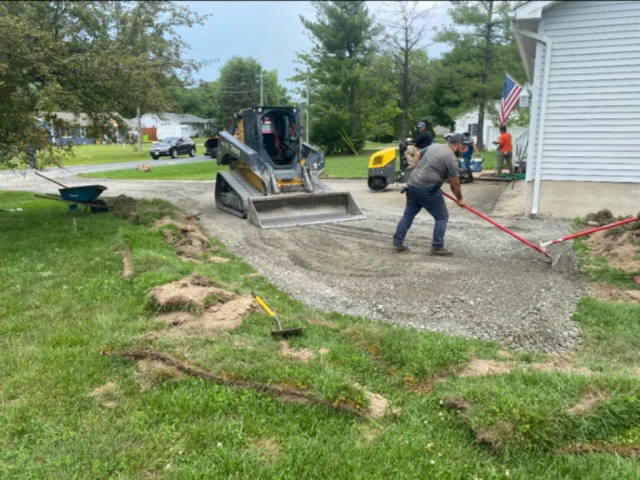
This is the one that moves a price more than anything else, and it is the one homeowners never see. If the existing stone base is intact, well graded, and compacted, a replacement is mostly tear out and repave. If the base has pumped up mud, gone soft in spots, or was never really there, it has to be fixed before new asphalt goes down. Fixing it can mean adding and regrading CR-6 crusher run, or it can mean digging out a soft area entirely and rebuilding it. I would rather tell you about a soft spot at the estimate than pave over it and watch it come through the new surface in two years. Preparation is the job. The asphalt is the finish.
Access, slope, and how much room the equipment has
A wide open driveway on flat ground off Route 258 is the easy version. A narrow lane with mature trees closing in, a tight turn at the garage, a steep pitch, or a waterfront lot with a bulkhead and no room to turn a truck around is a different day of work. When the paver cannot get in, more of the job gets done by hand, and hand work takes longer. Steep grades need more care on compaction so the roller does not tear the mat. None of this is a reason to walk away from a hard driveway. It is a reason the estimate on a hard driveway is not the same as the one your neighbor got on an open one.
Thickness and what mix goes down
More compacted asphalt costs more, and it lasts longer. A driveway built to carry a work truck, a loaded boat trailer, or an RV is not built the same as one that sees two sedans. Around here that matters more than most places, because plenty of driveways in Deale, Shady Side, and Churchton back a boat down to the water every summer weekend. Ask any estimator what compacted thickness they are quoting and what base depth it sits on. If two quotes are far apart, thickness is usually where the difference is hiding.
Drainage, the line people cut and then pay for twice
Water is what kills asphalt in this part of Maryland. We are on the Atlantic Coastal Plain, with sandy and clay soils, a water table that sits high near the Bay, and rain that comes hard. If a driveway is pitched to send water at the garage or hold it in a low spot, new asphalt on top of that problem is a countdown. Correcting pitch, adding a swale, setting a trench drain, or tying into an existing pipe adds to a quote. It also takes the thing that was going to destroy the driveway off the table. When a quote comes in noticeably cheaper than the others, check whether drainage is in it at all.
Tear out and haul away
Old asphalt has to go somewhere. Removal, loading, hauling, and the tipping fee are real line items, and they scale with how thick and how large the old surface is. A driveway that has been overlaid twice already has a lot of material to take off. There is a related decision here worth asking about: sometimes the old surface can be milled and reused as base on the same property instead of hauled off, which changes the math. Sometimes it cannot. It depends on what is under it and what condition it is in.
Resurfacing instead of replacing
A resurface, or overlay, puts new asphalt over the existing surface. It costs less than a full replacement because the old material stays and the base is not rebuilt. It is the right call when the base is sound and the surface is just worn, oxidized, or lightly cracked. It is the wrong call when the base has failed, when there are alligator cracks across large areas, when the driveway holds water, or when adding height at the garage or the road would create a new problem. An overlay over a failing base buys a couple of years and then you pay for the replacement anyway. Ask which one you are being quoted, and why.
How to compare two estimates that look nothing alike
Get everything in writing and get the same five things from each contractor: compacted thickness of the surface, depth and type of base stone, what happens to the old material, what is being done about water, and whether any permit is needed. A quote that says only "pave driveway" and a number is not comparable to anything. Also confirm the contractor holds a current MHIC license, which Maryland requires for home improvement work, and ask for proof of insurance. Ours is MHIC #05-169105. The cheapest number on the table is only the cheapest if it covers the same work.
Keep reading
- Driveway Replacement
Full tear out and rebuild, base included. Our main service.
- Resurfacing and Overlay
The lower cost option when the base underneath is still sound.
- Drainage Work
Pitch, swales, and trench drains. Water is what ends driveways here.
- Get a Free Written Estimate
We walk the site, then put the number in writing.
Frequently Asked Questions
Because base condition and drainage decide a large share of the cost, and neither can be assessed without seeing the site. Two driveways of identical size can need very different work underneath. A firm phone price is either padded to cover the unknown or likely to change once work starts. South State Paving gives free written estimates after a site walk.
The condition of the existing stone base. If it is intact and well compacted, the job is mostly tear out and repave. If it has gone soft, pumped mud, or was never properly built, it has to be regraded or dug out and rebuilt before new asphalt goes down, and that changes the price more than any other variable.
Yes, because the old surface stays in place and the base is not rebuilt. It is only the right choice when the base is sound and the damage is limited to the surface. Over a failed base, over widespread alligator cracking, or on a driveway that holds water, an overlay is a short-term fix and the full replacement still comes due.
Usually not. Getting the crew, paver, roller, and trucks to the site costs roughly the same regardless of job size, so that fixed cost is spread over less area on a small job. Combining work, such as doing the apron and a parking pad in the same visit, is generally more efficient than scheduling them separately.
Replacing an existing driveway in the same footprint often does not, but creating a new entrance or changing where it meets the road generally does. An entrance onto a state road such as Route 2, Route 4, or Route 258 is permitted through the Maryland State Highway Administration. An entrance onto a county road goes through the county. Confirm before work starts who is pulling any permit.